
ost people who tell me they want to go to Hawaii think they’re picking Hawaii. What they’re really picking is one of six islands — and the island they pick will shape almost everything about their trip.
Hawaii is eight main islands. Six are open to visitors. Each one has a completely different personality, climate, pace, and price point. The island that’s right for a honeymoon couple isn’t the same one that’s right for an active family with teenagers. The island that’s perfect for a first-time visitor is often the worst pick for someone who’s been before and wants something different.
Most disappointment with Hawaii trips traces back to the same root cause: the visitor picked the wrong island for what they actually wanted. Here’s a walkthrough of all eight — what they’re like, who they’re for, and who should skip them.
Oʻahu — The familiar one
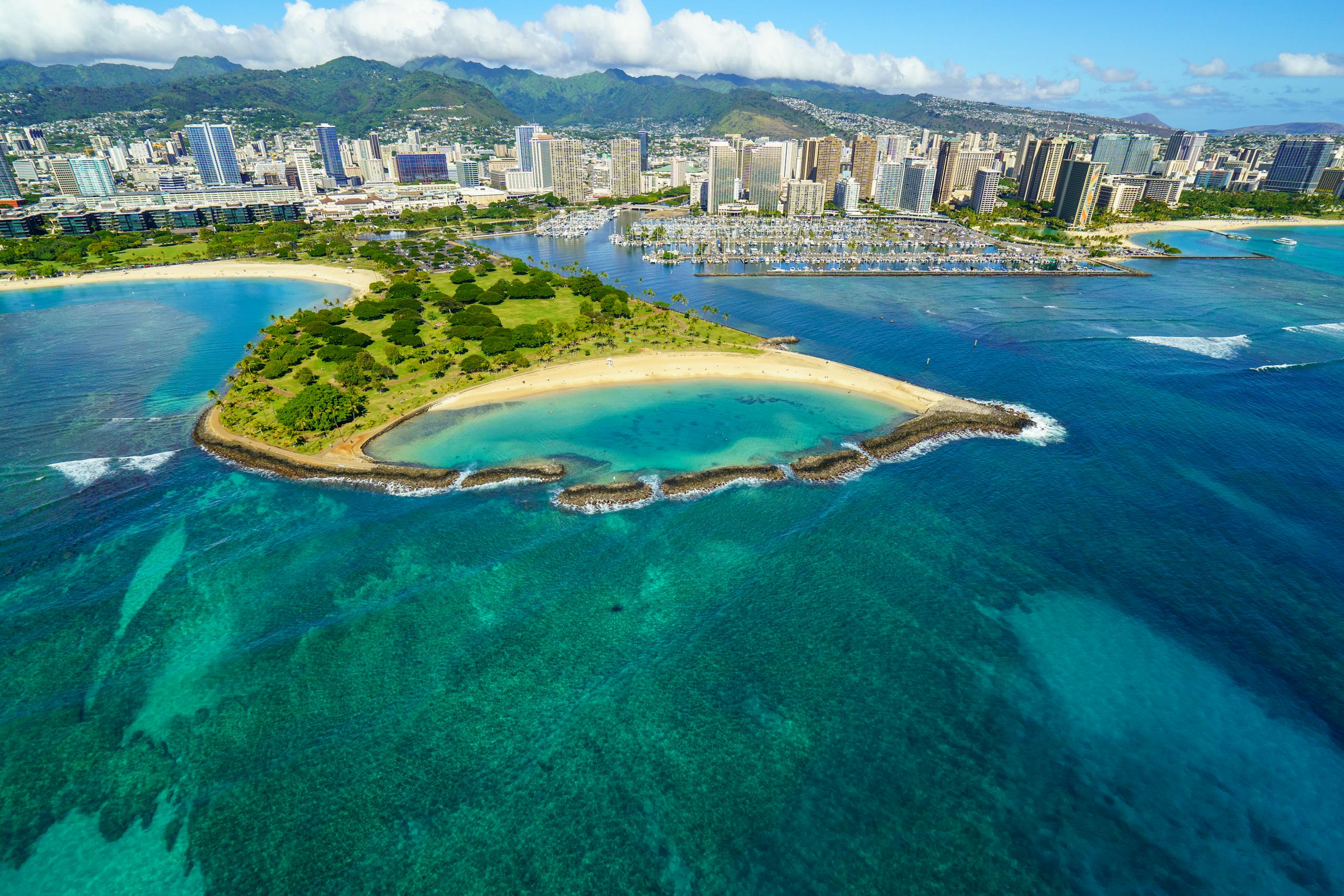
Home to Honolulu, Waikiki Beach, Pearl Harbor, and the North Shore. Oʻahu is the only island where you’ll find a real city, traffic jams, high-rises, and a 24-hour energy. It’s also where most visitors land — the Honolulu airport handles the bulk of incoming flights from the mainland.
Best for: First-time visitors who want a bit of everything in one place — beaches, hiking, surfing, nightlife, restaurants, history, and shopping. Pearl Harbor is here. The famous North Shore surf breaks are an hour from Waikiki. You can do a lot without driving far.
Skip Oʻahu if: You’re craving quiet, seclusion, or untouched landscapes. Waikiki is essentially a beach city, not a beach paradise.
Maui — The postcard
If Hawaii has a “default postcard” island, it’s Maui. The Road to Hana, the sunrise at Haleakalā Crater, the snorkeling at Molokini, the historic harbor town of Lahaina (now in long-term rebuild after the 2023 wildfire). Maui is dramatic, romantic, and photogenic in a way that even Oʻahu isn’t.
Best for: Honeymooners, couples, photographers, and anyone whose mental image of Hawaii looks like a magazine cover. The luxury resorts on the west and south coasts are some of the best in the islands.
Skip Maui if: You’re on a budget. Maui is the priciest island for hotels, food, and rental cars. It’s also one of the most crowded, especially during peak season.
Kauaʻi — The quiet one
The Garden Isle. Older geologically than the other islands, which is why it has the lush, deeply-eroded landscapes — the Na Pali Coast cliffs, the red canyons of Waimea, the wet jungle interior. Kauaʻi is for people who want Hawaii to feel like nature, not entertainment.
Best for: Hikers, nature lovers, photographers, and anyone who wants to feel far away from real life. Hanalei Bay on the North Shore is one of the most beautiful beaches in the world and feels nothing like Waikiki.
Skip Kauaʻi if: You want nightlife, lots of restaurants, or the ability to fill every day with a different activity. Kauaʻi rewards slow travel and rest.
Hawaiʻi Island (the Big Island) — The geological show
Called “the Big Island” to distinguish it from the state’s name. It’s bigger than all the other islands combined and growing — Kīlauea, one of the world’s most active volcanoes, is still adding land. You can ski Mauna Kea and snorkel a tropical reef on the same day.
Best for: Adventure travelers, science-curious visitors, families with older kids, and anyone who wants Hawaii to feel different from the usual island vacation. Volcanoes National Park is unlike anywhere else on Earth.
Skip the Big Island if: You want to “see everything” in a short visit. The driving distances are real — circumnavigating the island takes six hours or more. Plan to base yourself in one of the two main areas (Kona or Hilo) and accept what you can reach from there.
Lānaʻi — The resort island
Tiny, mostly owned by Larry Ellison since 2012, with no traffic lights and just two main resorts (both Four Seasons properties). The whole island operates more like a single integrated luxury experience than a destination.
Best for: Honeymooners, milestone anniversaries, and travelers who want to disconnect completely. Reachable only by short flight from Maui or by ferry.
Skip Lānaʻi if: You want variety, dining options outside your resort, or a budget that doesn’t tolerate Four Seasons pricing.
Molokaʻi — The real old Hawaii
The least-developed of the inhabited islands. Almost no resorts, no traffic lights on the entire island, a population that’s majority Native Hawaiian, and a culture that — by local choice — has resisted mass tourism. Visiting Molokaʻi is closer to visiting Hawaii in 1970 than visiting Hawaii today.
Best for: Cultural travelers, history lovers, and anyone who wants to see what Hawaii was like before tourism reshaped it. The Kalaupapa peninsula (a former Hansen’s disease settlement, now a National Historical Park) is a humbling visit.
Skip Molokaʻi if: You want comfort, predictability, or a wide range of dining and activity options. Visitors here are guests of a community that prefers it that way — respectful, low-impact visits work; demanding tourists don’t.
Niʻihau — The private one
The “Forbidden Island.” Privately owned since 1864 by the Robinson family. Closed to general tourism. About 70 Native Hawaiians live there year-round under deliberately preserved conditions — no cars, no internet, no modern infrastructure.
Why I’m mentioning it: Limited helicopter tours and snorkeling day trips are run from Kauaʻi by the Robinson family. They land at a remote beach and visitors don’t interact with the residents. It’s a curiosity rather than a destination, but it exists, and most people don’t realize Hawaii has a “Forbidden Island.”
Kahoʻolawe — The uninhabited one
The eighth island, and the one almost nobody mentions. Uninhabited. Used by the US military as a bombing range from 1941 to 1990. Now in long-term ecological and cultural restoration under Native Hawaiian stewardship. Closed to almost all visitors except authorized restoration volunteers and cultural practitioners.
Why I’m mentioning it: Most lists of Hawaiian islands stop at six. Knowing all eight is what separates someone who’s been to Hawaii from someone who knows Hawaii.
The point
Hawaii isn’t one trip. It’s eight — and most people only need one or two. The right island depends on who you’re traveling with, what you actually want from a vacation, and what you can’t stand.
Picking the wrong island isn’t a disaster. But it’s the difference between a trip you love and a trip that “was nice, but next time I want to try somewhere else.” That “somewhere else” was probably the right island in the first place.
If Hawaii is on your radar, this is exactly the kind of conversation worth having before you book anything. I’ll match you to the island that fits how you actually travel — not the one everyone tells you to visit. Reach out and we’ll talk it through.