
The first cruise is the one that decides whether you’ll be a cruiser. Get it right and you’ll book the next one before you disembark. Get it wrong and you’ll write off cruising for years. Most disappointing first cruises trace back to the same mistake: the buyer optimized for price instead of fit, and ended up on a ship that wasn’t designed for someone like them.
Here are the eight decisions that matter — in roughly the order you should make them.
1. What kind of cruise experience matches you?
The biggest decision, and the one most first-timers skip: big ship or small ship?
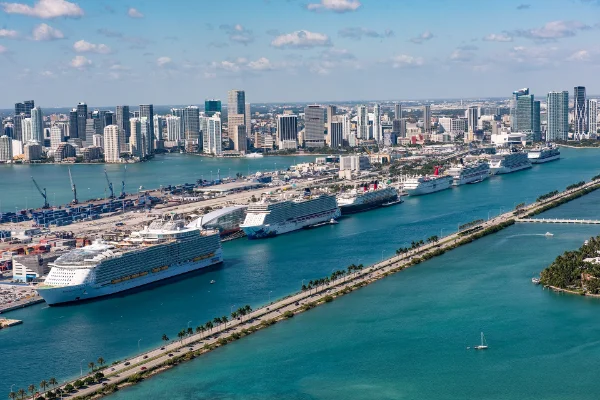
Big ships are floating resorts. Royal Caribbean, Norwegian, Carnival, MSC, and Disney run vessels with 3,000–7,000 passengers, multiple pools, water parks, Broadway-style theaters, ten or more restaurants, casinos, kids’ clubs, and 24-hour activity programming. The ship is the destination as much as the ports are.
Small ships and premium lines — Viking, Oceania, Windstar, Azamara, and similar — run vessels with 200–1,000 passengers. No water parks, no climbing walls, no casinos. More focus on the destinations, more refined dining, quieter atmospheres, older average passenger age.
Most first-time cruisers default to a big ship because that’s what cruise advertising shows. Some of them love it. Others step on board, realize they’ve booked a floating shopping mall, and never cruise again. Knowing this fork exists is half the battle.
2. Where do you want to go?
First-timers usually start with the Caribbean for good reasons: short flights from the US, predictable weather most of the year, easy embarkation from Florida ports, and itineraries ranging from 3 to 10 days.
Other regions come with their own considerations:
- Alaska runs May through September only. Glaciers, wildlife, dramatic landscapes, cooler weather.
- Mediterranean runs May through October. City-heavy itineraries — Barcelona, Rome, Athens, Venice. Less beach, more history.
- Northern Europe is June through August. Norwegian fjords, Baltic capitals, midnight sun.
- River cruises (Danube, Rhine, Douro) are a different category entirely — smaller ships, fewer passengers, city-to-city pacing.
The destination shapes the experience. Caribbean is a beach-and-sun trip. Mediterranean is a history-and-cities trip. Alaska is a nature trip. Pick the experience, then the cruise line.
3. How long?
3 or 4 days: the ideal first cruise. Low commitment. Cheap enough to risk it. By Day 2 you’ll know whether cruising is for you.
7 days: the most common cruise length. More itinerary variety, better value per day, deeper feeling of vacation. Recommended if you’re confident you’ll like cruising.
10–14 days: for second cruises or for travelers who already know they love being at sea.
14 days or longer: transatlantic crossings, world cruise segments, deep expedition trips. Not a first cruise.
4. Cabin category
The cabin matters more than most first-timers expect.
- Interior cabin — no window. Cheapest by far. Fine for travelers who plan to be out of the cabin from dawn to midnight. Bad for anyone who values morning light, daylight, or knowing where the sun is.
- Oceanview — a sealed window. Lets in light. No outdoor access.
- Balcony — a sealed window plus a small private outdoor space with a chair or two. The single biggest quality-of-life upgrade most first-timers can make. Coffee in the morning with ocean in front of you changes the whole feel of the cruise.
- Suite — bigger, with concierge benefits, priority embarkation, and exclusive areas on some ships. Expensive. Worth it on premium lines, less essential on mainstream ones.
Most people regret booking interior on their first cruise. If the budget allows a balcony, take it.
5. What’s actually included (and what isn’t)
The advertised cruise fare typically includes: your cabin, basic meals across the main dining venues, ship facilities (pools, fitness center, basic entertainment), and embarkation/disembarkation.
The advertised fare typically does NOT include:
- Alcoholic drinks
- Specialty coffee, bottled water, sodas
- Specialty restaurants (the “main dining room” is included; the steakhouse and sushi spot aren’t)
- Wi-Fi
- Gratuities
- Shore excursions
- Spa services
- Casino spending
Some cruise lines now bundle more into the base fare — Celebrity’s “Always Included” fares roll in drinks, Wi-Fi, and gratuities, for example. Read the inclusion list carefully before comparing prices across lines. A cheap-looking fare can become expensive once the extras land.
6. Gratuities and the real total cost
Most cruise lines charge $15–20 per person per night in gratuities, automatically added to your onboard account. For a family of four on a 7-night cruise, that’s roughly $400–560 on top of the fare.
Other budget realities for first-timers:
- Beverage package: $50–90 per person per day if you drink alcohol regularly. Even non-drinkers often opt for a soda or specialty coffee package.
- Shore excursions: $50–200 per person per port (you can book outside the ship for less, but you take on the risk of missing the ship if you’re late returning).
- Wi-Fi: $15–30 per day if not included.
A “$799 cruise” can easily become a $2,000 cruise per person once everything is added. Budget honestly upfront and there are no surprises.
7. Embarkation port
Driving to your departure port beats flying if it’s feasible. Florida ports (Miami, Fort Lauderdale, Port Canaveral, Tampa) handle most Caribbean sailings. Driving means no flight risk, no luggage fees, and you can load up the car with whatever you want to bring.
If flying, plan to arrive the day before embarkation, not the same day. Same-day flights are how people miss their cruise — the ship will not wait if your flight is delayed. A pre-cruise hotel night is cheap insurance.
8. Time of year
- Caribbean: Hurricane season is June through November. Cruises still run and are cheaper, but you accept the risk of weather diversions or itinerary changes. December through May is prime cruising weather.
- Alaska: May through September only — outside that window, cruises don’t run.
- Mediterranean: May through October. April and October are shoulder season — better prices, smaller crowds, occasionally cooler weather.
- Holiday weeks (Christmas, New Year’s, spring break, Thanksgiving): pricier, more crowded, harder to book popular itineraries.
The bottom line
The right first cruise isn’t the cheapest one or the one with the most amenities. It’s the one where the ship size, destination, length, cabin, and timing all match who you are and what you actually want from a vacation. Cruise lines are not interchangeable. Carnival is a different experience than Celebrity is a different experience than Viking — and a vacation that’s perfect for a Carnival passenger can be a disappointing one for someone who would have loved Viking.
If you’re considering your first cruise, that’s exactly the conversation worth having before you book. Reach out and we’ll walk through these eight decisions together — by the end of the call, you’ll know which line, which ship, which itinerary, and which cabin fits how you actually want to travel.